Increased Strength and Power: Helps you lift heavier weights and perform more reps, leading to greater muscle gains over time.
Enhanced Athletic Performance: Ideal for high-intensity sports and activities, improving overall performance and endurance.
Improved Muscle Recovery: Reduces muscle soreness and accelerates recovery, allowing you to train more frequently.
Supports Lean Muscle Mass: Promotes the growth of lean muscle tissue without adding unwanted fat.
Can be easily mixed in water
Tested for Athletes by Informed Sport
Halal Certified Product
Add 1 serving (5g) to water, shake and consume. Use 1-2 times daily preferably directly before and after exercise. After 8 weeks of continued use take 1 week off and start the cycle again.
2.Applied Nutrition Creatine Flavoured 250 Gram
Creatine Monohydrate increases physical performance in successive bursts of short-term, high-intensity exercise
Mix with shakes or smoothies
Tested for Athletes™
Suitable for vegans & vegetarians
Halal certified product
Mix 1 scoop (5g) with 200ml of water, stir and consume. Use 1-2 times daily preferably with breakfast or after exercise.
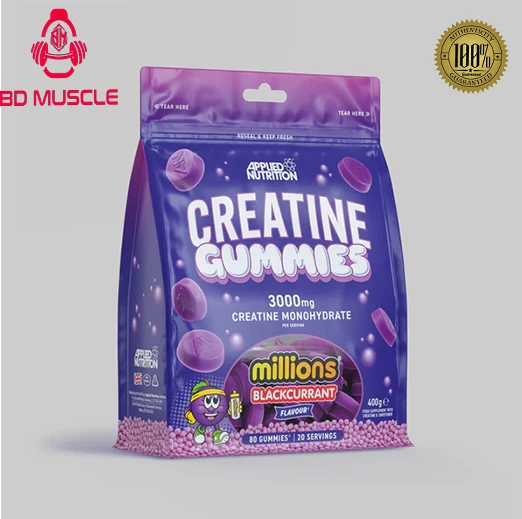
3.Applied Nutrition Creatine Gummies
3000mg of Creatine Monohydrate per serving
Convenient solution without messy powders
Creatine contributes to increased physical performance during successive bursts of short-term, high-intensity exercise. The beneficial effect is obtained with a daily intake of 3g of creatine
Reduced digestive discomfort often associated with creatine powders
Vegetarian & vegan friendly
Halal certified product
Gluten free & Non-GMO
Consume 4 creatine gummies daily. Do not exceed the suggested use. This pack is filled by weight. There are approximately 80 gummies per pack.
4. Applied Nutrition Creatine Liquide Creaflow
3000mg of creatine monohydrate per serving
Offers rapid absorption & convenience
Reduced digestive discomfort often associated with creatine powders
Vegetarian & vegan friendly
Halal certified product
Consume one serving (50ml Cap) of creatine liquid before or after workouts. Shake well before use. Do not consume more than the recommended dosage.
Increased Strength and Power: Helps you lift heavier weights and perform more reps, leading to greater muscle gains over time.
Enhanced Athletic Performance: Ideal for high-intensity sports and activities, improving overall performance and endurance.
Improved Muscle Recovery: Reduces muscle soreness and accelerates recovery, allowing you to train more frequently.
Supports Lean Muscle Mass: Promotes the growth of lean muscle tissue without adding unwanted fat.
Can be easily mixed in water
Boost Endurance: Tackle intense workouts with sustained energy
Tested for Athletes by Informed Sport
Gluten Free
Vegan Friendly
Halal Certified Product
Mix 1 scoop of unflavoured powder (7.4g) in your favourite flavoured supplement, smoothie, or juice. Take 1–2 servings daily, ideally before and after your workout. Use only as directed. Scoops are estimate only; weighing scales are recommended.
6.Applied Nutrition Creatine caps 3000mg
Halal Certified
Tested For Athletes
Creatine increases physical performance in successive bursts of short-term, high-intensity exercise
Plant-based Veggie Shell well suited for consumers with dietary, religious, or cultural restrictions
Take 4 capsules twice daily with meals.
7.Applied Nutrition body fuel creatine monohydrate flavoured
Creatine Monohydrate increases physical performance in successive bursts of short-term, high intensity exercise
Mix with juice, shakes or smoothies
Suitable for vegans & vegetarians
Halal certified product
Mix 1 scoop (5g) with 250ml of water or fruit juice, stir and consume. Use 1-2 times daily preferably with breakfast or after exercise.
Scoops are estimate only, weighing scales are recommended.
After practicing basic seams, I am ready to plan several wearable tops with colors that make sense together. The fabric shop sells generous lengths, so choosing poorly could leave me with material I cannot easily use elsewhere. Most of my existing trousers are charcoal or denim, but that still leaves a surprisingly wide range of possible top colors. I have narrowed the samples to a quiet green, a wine shade, and cream for an initial comparison. To give the swatch comparison some structure, I have been reading about personal color analysis but my immediate goal is choosing usable fabric rather than settling every question about seasonal categories. Is a low-cost trial garment a better next step than spending longer with the loose swatches? I would welcome advice from anyone who has balanced a personal palette with the realities of learning to sew.
Gracegref
11 Nov 2026
I have several video presentations coming up and want to select a small rotation of clothes for the camera. The mirror and the video preview give me different impressions, especially when a shirt contrasts strongly with my pale background. I am not trying to look formally dressed every day; I mainly want my face to remain easy to see. My plan is to compare plain tops with the same camera placement and lighting, using clothes I already have. I found a page about color analysis and would like to use the idea as a starting point for these comparisons. Fine patterns seem busy on screen, so I am concentrating on solid colors before deciding anything about new purchases. Would you judge the colors from a short recording rather than the live preview, or is either method equally useful? Another uncertainty is whether I should prioritize the color near my face or its relationship with the room background. If you present online regularly, I would appreciate the checks you use before settling on your usual camera clothes.
Ellasr
12 Nov 2026
I am replacing my everyday glasses, and the choice of frame colors has become more complicated than the shape. Fit has narrowed the choice to one model, but its brown, grey, and muted red versions look quite different. I usually wear fairly plain clothes, so the frames will be one of the most noticeable colors near my face. One reference I came across while thinking about the choice is personal color analysis but I need a practical way to use that information when trying the frames in person. Would you compare the colors without makeup first, then try them again with your normal clothes and makeup? I can take a friend along, although I would rather avoid choosing purely on the strength of a phone photograph. How would you decide between two equally comfortable frames when neither color looks obviously wrong at first glance?
Emilyjego
13 Nov 2026
I buy clothes secondhand, and sellers often use completely different names for what looks like the same color. I want a short reference list that helps me search without turning every purchase into a research project. A precise seasonal name does not help much when a seller describes everything as blue or green. The reference I am considering as a starting point is my color palette but I still need a way to describe the colors in ordinary shopping language. For example, a note that distinguishes a dusty blue from a vivid blue might help more than a long list of names that never appear in the descriptions sellers write. Would a few sample shades be clearer than separate notes about warmth, depth, and mutedness? Existing clothes give me something to compare against, although listing photographs can still be misleading. What would you include in a compact reference that is actually useful during a secondhand search?
Compare_jdSn
13 Nov 2026
Discover the top tools for your prediction market strategy in 2026 by Polymarket trading bot.
In 2026,. identifying the optimal automation tool is vital. to help you choose the best fit for your 2026 strategy.
**Arbitrage Bots**
For traders seeking arbitrage opportunities,. Among the top options are Bot A, Bot B, and Bot C.
**Market Making Bots**
Market making bots provide liquidity and stability in prediction markets. Their strategy involves constant order placement to earn the bid-ask spread. Many market-making bots allow users to adjust parameters based on their trading preferences. Popular options include Bot D, Bot E, and Bot F.
**Copy Trading , Automation Bots**
Copy trading tools simplify strategy implementation for beginners. These tools track performance metrics and emulate profitable patterns. Automation bots automate various tasks, including trade entry, exit, and strategy adjustments. They offer features like risk management, performance tracking, and customizable settings.
**Conclusion**
Choosing the right Polymarket trading bot in 2026 depends on your specific goals. For arbitrage, market making, or automation,. Investing in the right bot can significantly enhance your trading efficiency.
LucasKr
13 Nov 2026
For our next drawing workshop, I want to start with the outline of short hair rather than detailed texture. The recurring difficulty is that texture attracts attention before anyone has looked carefully at the overall outline. The reference cards could show differences at the fringe, the sides, and the spaces just above the ears. One reference category I want to include is pixie haircut and I would welcome other useful references. To keep it useful for drawing, I want observations about the reference rather than personal styling recommendations. A first step might be marking the outer contour before looking at the forehead overlap and the empty spaces nearby. The final stage could use a handful of directional strokes, leaving enough blank space to preserve the larger shape. How would you phrase a few short prompts that keep attention on silhouette before texture?
Chloeoa
13 Nov 2026
I am between fringe styles and struggling with the length around my eyes. Some sections skim my cheekbones and others remain noticeably shorter. I have been looking at blonde hair with curtain bangs for ideas about the outline, although the photographs rarely explain the transition between cuts. I would like the front to blend into the rest without losing much length. My natural part sits slightly off centre and returns there after washing. I can shape it with a brush, though I would rather avoid heat every morning. Would a small trim at the edges help, or should I leave the shorter pieces alone? I will show the hairdresser how the front sits without a styled finish. I usually wear the rest of my hair loose, which makes the difference between the short front pieces and the longer sides quite noticeable. Hearing how others handled the in-between length would help me decide what to ask for.
Emilyvof
15 Nov 2026
My gym shifts change every week, so I am trying to plan a qualification without guessing the total expense. I have started by listing the examination fee as a separate item. Books, practice materials and travel could affect the decision as much as the headline price. I found a reference while looking into strength and conditioning certification cost and want to turn that reading into a practical checklist. I would confirm the current charges with the awarding organisation before booking. My main uncertainty is how much contingency to reserve for a later attempt. A cheaper study package might still be inconvenient if it assumes hours I cannot protect. I would rather compare complete budgets than rank qualifications by one fee. I am also noting when each payment is due, since spreading expenses across several months would be easier than finding the entire amount in one week. Which overlooked expenses belong on a beginner’s planning checklist?
Sophienit
15 Nov 2026
A changing clinical placement schedule has made my examination planning less straightforward than I expected. My calendar needs more than a single examination date because the application has its own milestones. I am now separating eligibility confirmation, document submission and the point when booking becomes possible. One phrase I used to locate background reading was boc exam dates and I am using that reading to refine the questions in my notes. I also need to consider travel if the eventual appointment is some distance from my placement. A listed window is only a planning reference until I have checked the official booking information. I am labelling tentative entries separately to avoid confusing my initial plan with a confirmed booking. I would like to discuss this with my placement supervisor while there is still room to adjust things. Which scheduling details are easiest to overlook when planning an examination alongside clinical placement hours?
GraceBora
16 Nov 2026
I work rotating retail shifts and am trying to prepare without building a timetable that only works on paper. Some weeks I can study before work; on others the same hour follows a late finish. I want a routine that reflects how much attention I actually have available. My first plan uses brief sessions. Reading needs a quiet setting. I can save longer exercises for weekends. A phrase I used to find background material was police exam and I am using it as a starting point for further questions. The calendar should include recovery time. I will record what I finish. Missed sessions should be easy to reschedule. Official instructions will guide my priorities. The aim is to distinguish a genuinely useful routine from one that simply fills every free hour. Before choosing materials, I also need to confirm which assessment the agency uses, since a general preparation plan may cover topics that are irrelevant to my application. What makes a changing timetable workable?
Lucaskads
16 Nov 2026
I am comparing an untimed practice session with a timed one and trying to understand what the difference actually means. A lower score under time pressure could reflect several problems. I do not want to assume that every wrong answer points to the same gap in knowledge. I am recording where time disappears. Some questions require a second reading. Other mistakes happen after quick guesses. A phrase I used to find background material was ntn police practice test and I am using it as a starting point for further questions. The answer key cannot explain everything. Comparable tasks would make comparison fairer. Repeated questions may distort the picture. I will check official assessment guidance. My next step is to note whether each error involved understanding the instructions, choosing between plausible answers or running out of time. I also want to avoid treating a practice score as a prediction of a hiring outcome. The purpose is to decide what to study next. What would you record besides scores?
Ameliarefs
17 Nov 2026
I am considering a real estate course in Georgia and want to understand the sequence before enrolling. Course advertisements explain what they sell, but I still need a clear picture of which steps depend on something else being completed first. I am building a simple diagram rather than choosing a course from its headline alone. I am listing unanswered questions first. I want meaningful links between steps. There are decisions beyond course selection. My background reading began with how to get a real estate license in georgia and raised several questions worth checking directly. Current requirements need checking directly. Marketing descriptions need some supporting information. I will mark uncertain steps explicitly. I want focused questions for providers. I would like to compare this diagram with the relevant official guidance and then ask providers about the particular services they offer. That should help me distinguish an explanation of the licensing process from a promise about what purchasing a course will achieve. Which dependencies would you clarify first?
0tled4sx
17 Nov 2026
I also found a relevant page while reading about this topic.
Here is a relevant page:
https://serrano-arquitectura.net/2026/08/03/kundtjanst-hos-wild-fortune-casino-spela-online-kontaktvagar-och-svarskvalitet-komplett-guide-2/
The information should be evaluated in the context of the available evidence.
Clullyzon
17 Nov 2026
Hi there!
I tried using color coding in my notes once; it was fun, but ultimately unnecessary for me. Sticking to plain text feels more efficient. I appreciate the simplicity and clarity it provides in my note-taking process.
I collect them here: https://openpagenotes.com/
Interested in other approaches.
Chloeheli
18 Nov 2026
My daily commute involves a bicycle helmet, followed by a fairly rushed start at the office. The change I want is mainly around the face, with the rest still long enough to tie back. The look on my shortlist is blonde hair with curtain bangs for this project. My question is about the cut rather than the colour, because my current shade is staying as it is. Most pictures show freshly styled hair, which makes it difficult to judge an ordinary commuting day. I can carry a small comb, but a dryer and round brush at the office are not practical. Is leaving the shortest pieces longer a sensible way to keep a tuck behind the ears option? My hair is fairly straight, and I would prefer a cut that still looks reasonable when I leave it to dry naturally. Experience from other regular cyclists would help me set realistic expectations before booking a cut.




(1038) Comments
Ellaol
10 Nov 2026After practicing basic seams, I am ready to plan several wearable tops with colors that make sense together. The fabric shop sells generous lengths, so choosing poorly could leave me with material I cannot easily use elsewhere. Most of my existing trousers are charcoal or denim, but that still leaves a surprisingly wide range of possible top colors. I have narrowed the samples to a quiet green, a wine shade, and cream for an initial comparison. To give the swatch comparison some structure, I have been reading about personal color analysis but my immediate goal is choosing usable fabric rather than settling every question about seasonal categories. Is a low-cost trial garment a better next step than spending longer with the loose swatches? I would welcome advice from anyone who has balanced a personal palette with the realities of learning to sew.
Gracegref
11 Nov 2026I have several video presentations coming up and want to select a small rotation of clothes for the camera. The mirror and the video preview give me different impressions, especially when a shirt contrasts strongly with my pale background. I am not trying to look formally dressed every day; I mainly want my face to remain easy to see. My plan is to compare plain tops with the same camera placement and lighting, using clothes I already have. I found a page about color analysis and would like to use the idea as a starting point for these comparisons. Fine patterns seem busy on screen, so I am concentrating on solid colors before deciding anything about new purchases. Would you judge the colors from a short recording rather than the live preview, or is either method equally useful? Another uncertainty is whether I should prioritize the color near my face or its relationship with the room background. If you present online regularly, I would appreciate the checks you use before settling on your usual camera clothes.
Ellasr
12 Nov 2026I am replacing my everyday glasses, and the choice of frame colors has become more complicated than the shape. Fit has narrowed the choice to one model, but its brown, grey, and muted red versions look quite different. I usually wear fairly plain clothes, so the frames will be one of the most noticeable colors near my face. One reference I came across while thinking about the choice is personal color analysis but I need a practical way to use that information when trying the frames in person. Would you compare the colors without makeup first, then try them again with your normal clothes and makeup? I can take a friend along, although I would rather avoid choosing purely on the strength of a phone photograph. How would you decide between two equally comfortable frames when neither color looks obviously wrong at first glance?
Emilyjego
13 Nov 2026I buy clothes secondhand, and sellers often use completely different names for what looks like the same color. I want a short reference list that helps me search without turning every purchase into a research project. A precise seasonal name does not help much when a seller describes everything as blue or green. The reference I am considering as a starting point is my color palette but I still need a way to describe the colors in ordinary shopping language. For example, a note that distinguishes a dusty blue from a vivid blue might help more than a long list of names that never appear in the descriptions sellers write. Would a few sample shades be clearer than separate notes about warmth, depth, and mutedness? Existing clothes give me something to compare against, although listing photographs can still be misleading. What would you include in a compact reference that is actually useful during a secondhand search?
Compare_jdSn
13 Nov 2026Discover the top tools for your prediction market strategy in 2026 by Polymarket trading bot. In 2026,. identifying the optimal automation tool is vital. to help you choose the best fit for your 2026 strategy. **Arbitrage Bots** For traders seeking arbitrage opportunities,. Among the top options are Bot A, Bot B, and Bot C. **Market Making Bots** Market making bots provide liquidity and stability in prediction markets. Their strategy involves constant order placement to earn the bid-ask spread. Many market-making bots allow users to adjust parameters based on their trading preferences. Popular options include Bot D, Bot E, and Bot F. **Copy Trading , Automation Bots** Copy trading tools simplify strategy implementation for beginners. These tools track performance metrics and emulate profitable patterns. Automation bots automate various tasks, including trade entry, exit, and strategy adjustments. They offer features like risk management, performance tracking, and customizable settings. **Conclusion** Choosing the right Polymarket trading bot in 2026 depends on your specific goals. For arbitrage, market making, or automation,. Investing in the right bot can significantly enhance your trading efficiency.
LucasKr
13 Nov 2026For our next drawing workshop, I want to start with the outline of short hair rather than detailed texture. The recurring difficulty is that texture attracts attention before anyone has looked carefully at the overall outline. The reference cards could show differences at the fringe, the sides, and the spaces just above the ears. One reference category I want to include is pixie haircut and I would welcome other useful references. To keep it useful for drawing, I want observations about the reference rather than personal styling recommendations. A first step might be marking the outer contour before looking at the forehead overlap and the empty spaces nearby. The final stage could use a handful of directional strokes, leaving enough blank space to preserve the larger shape. How would you phrase a few short prompts that keep attention on silhouette before texture?
Chloeoa
13 Nov 2026I am between fringe styles and struggling with the length around my eyes. Some sections skim my cheekbones and others remain noticeably shorter. I have been looking at blonde hair with curtain bangs for ideas about the outline, although the photographs rarely explain the transition between cuts. I would like the front to blend into the rest without losing much length. My natural part sits slightly off centre and returns there after washing. I can shape it with a brush, though I would rather avoid heat every morning. Would a small trim at the edges help, or should I leave the shorter pieces alone? I will show the hairdresser how the front sits without a styled finish. I usually wear the rest of my hair loose, which makes the difference between the short front pieces and the longer sides quite noticeable. Hearing how others handled the in-between length would help me decide what to ask for.
Emilyvof
15 Nov 2026My gym shifts change every week, so I am trying to plan a qualification without guessing the total expense. I have started by listing the examination fee as a separate item. Books, practice materials and travel could affect the decision as much as the headline price. I found a reference while looking into strength and conditioning certification cost and want to turn that reading into a practical checklist. I would confirm the current charges with the awarding organisation before booking. My main uncertainty is how much contingency to reserve for a later attempt. A cheaper study package might still be inconvenient if it assumes hours I cannot protect. I would rather compare complete budgets than rank qualifications by one fee. I am also noting when each payment is due, since spreading expenses across several months would be easier than finding the entire amount in one week. Which overlooked expenses belong on a beginner’s planning checklist?
Sophienit
15 Nov 2026A changing clinical placement schedule has made my examination planning less straightforward than I expected. My calendar needs more than a single examination date because the application has its own milestones. I am now separating eligibility confirmation, document submission and the point when booking becomes possible. One phrase I used to locate background reading was boc exam dates and I am using that reading to refine the questions in my notes. I also need to consider travel if the eventual appointment is some distance from my placement. A listed window is only a planning reference until I have checked the official booking information. I am labelling tentative entries separately to avoid confusing my initial plan with a confirmed booking. I would like to discuss this with my placement supervisor while there is still room to adjust things. Which scheduling details are easiest to overlook when planning an examination alongside clinical placement hours?
GraceBora
16 Nov 2026I work rotating retail shifts and am trying to prepare without building a timetable that only works on paper. Some weeks I can study before work; on others the same hour follows a late finish. I want a routine that reflects how much attention I actually have available. My first plan uses brief sessions. Reading needs a quiet setting. I can save longer exercises for weekends. A phrase I used to find background material was police exam and I am using it as a starting point for further questions. The calendar should include recovery time. I will record what I finish. Missed sessions should be easy to reschedule. Official instructions will guide my priorities. The aim is to distinguish a genuinely useful routine from one that simply fills every free hour. Before choosing materials, I also need to confirm which assessment the agency uses, since a general preparation plan may cover topics that are irrelevant to my application. What makes a changing timetable workable?
Lucaskads
16 Nov 2026I am comparing an untimed practice session with a timed one and trying to understand what the difference actually means. A lower score under time pressure could reflect several problems. I do not want to assume that every wrong answer points to the same gap in knowledge. I am recording where time disappears. Some questions require a second reading. Other mistakes happen after quick guesses. A phrase I used to find background material was ntn police practice test and I am using it as a starting point for further questions. The answer key cannot explain everything. Comparable tasks would make comparison fairer. Repeated questions may distort the picture. I will check official assessment guidance. My next step is to note whether each error involved understanding the instructions, choosing between plausible answers or running out of time. I also want to avoid treating a practice score as a prediction of a hiring outcome. The purpose is to decide what to study next. What would you record besides scores?
Ameliarefs
17 Nov 2026I am considering a real estate course in Georgia and want to understand the sequence before enrolling. Course advertisements explain what they sell, but I still need a clear picture of which steps depend on something else being completed first. I am building a simple diagram rather than choosing a course from its headline alone. I am listing unanswered questions first. I want meaningful links between steps. There are decisions beyond course selection. My background reading began with how to get a real estate license in georgia and raised several questions worth checking directly. Current requirements need checking directly. Marketing descriptions need some supporting information. I will mark uncertain steps explicitly. I want focused questions for providers. I would like to compare this diagram with the relevant official guidance and then ask providers about the particular services they offer. That should help me distinguish an explanation of the licensing process from a promise about what purchasing a course will achieve. Which dependencies would you clarify first?
0tled4sx
17 Nov 2026I also found a relevant page while reading about this topic. Here is a relevant page: https://serrano-arquitectura.net/2026/08/03/kundtjanst-hos-wild-fortune-casino-spela-online-kontaktvagar-och-svarskvalitet-komplett-guide-2/ The information should be evaluated in the context of the available evidence.
Clullyzon
17 Nov 2026Hi there! I tried using color coding in my notes once; it was fun, but ultimately unnecessary for me. Sticking to plain text feels more efficient. I appreciate the simplicity and clarity it provides in my note-taking process. I collect them here: https://openpagenotes.com/ Interested in other approaches.
Chloeheli
18 Nov 2026My daily commute involves a bicycle helmet, followed by a fairly rushed start at the office. The change I want is mainly around the face, with the rest still long enough to tie back. The look on my shortlist is blonde hair with curtain bangs for this project. My question is about the cut rather than the colour, because my current shade is staying as it is. Most pictures show freshly styled hair, which makes it difficult to judge an ordinary commuting day. I can carry a small comb, but a dryer and round brush at the office are not practical. Is leaving the shortest pieces longer a sensible way to keep a tuck behind the ears option? My hair is fairly straight, and I would prefer a cut that still looks reasonable when I leave it to dry naturally. Experience from other regular cyclists would help me set realistic expectations before booking a cut.